
Education, Human Capital and the Geo-Society: Inequality, Power and the Future of Democracy
Rolling call for contributions: The book series welcomes proposals on a rolling basis.
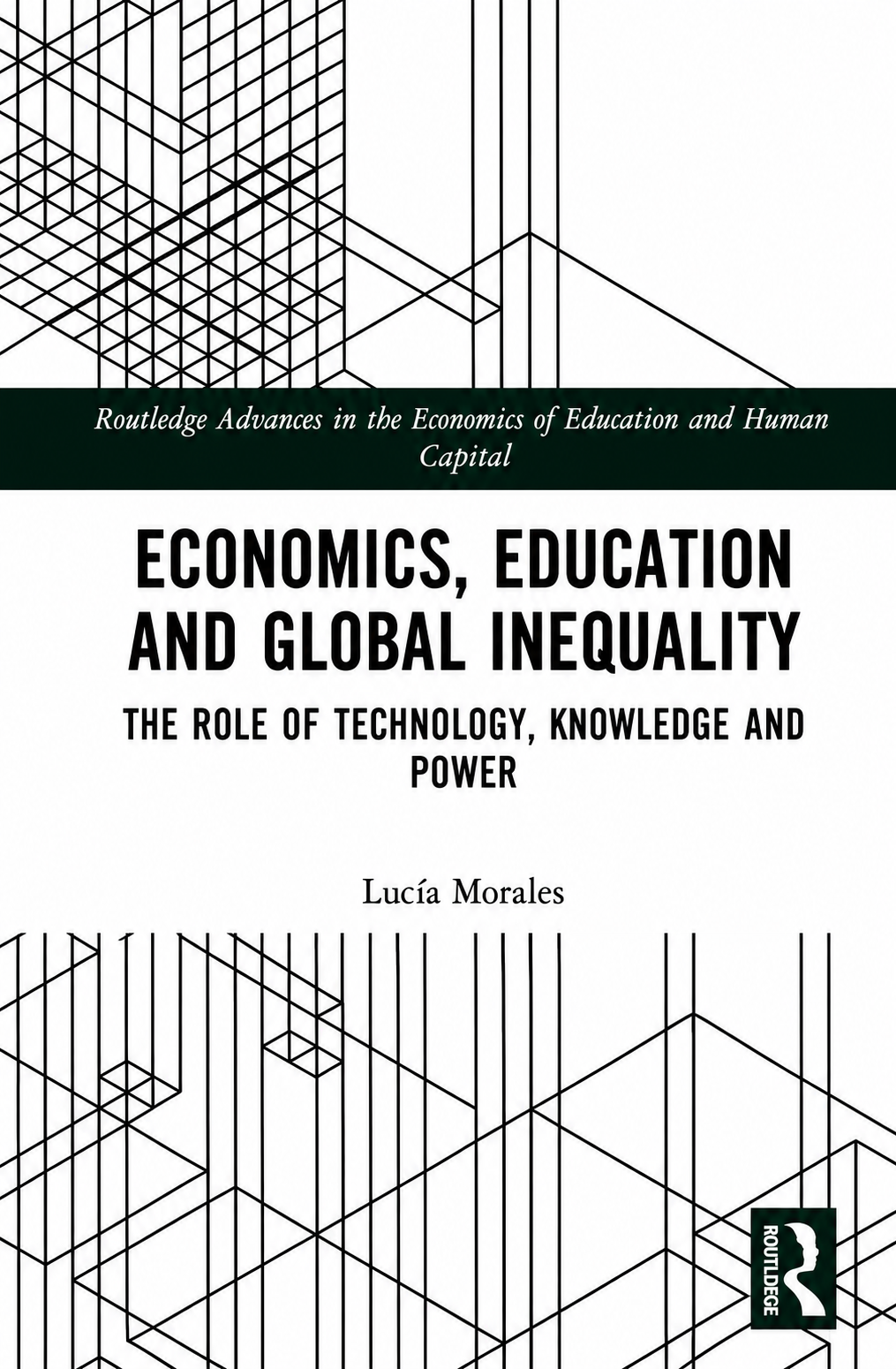
The first book in the series examines how education and human capital shape—and are shaped by—concentrations of wealth and power. The book introduces the concept of geo-society as a framework. Authors’ contributions may explore how historical legacies, spatial inequalities, institutions, technology, and economic systems shape access to education, skills development, labour markets, and democratic participation. We welcome interdisciplinary, comparative and policy-focused work on how education systems and universities can reproduce or challenge inequality and contribute to more inclusive and sustainable development.
The theme aligns with the series’ focus on the relationship between education, human capital, economic development, technological change and socio-economic inequality. Find out more about the Routledge Advances in the Economics of Education and Human Capital book series.
Researchers interested in discussing a book proposal or contributing a chapter to an ongoing book project are warmly invited to contact Dr Lucía Morales at [email protected]. We welcome contributions from established and early career researchers. Focused seminars are also organised to help researchers develop their chapters, with particular support for early career researchers.
Special Issues - Calls for Abstracts
We warmly invite researchers to explore these special issue opportunities on education, inequality, power and global change:
- Growth, Power and the New Global Disorder: Interdisciplinary Perspectives on Education — Read the call for abstracts in Studies in Social Justice. The announcement lists an abstract proposal deadline of September 2026.
- Global Disorder, Unequal Futures: Power, Inequality and the Struggle for Inclusive Education — Read the call for papers in Diversity & Inclusion Research. Abstract proposals of up to 500 words are due by 30 November 2026. Selected authors will be invited to submit full manuscripts by 31 May 2027.
For questions about either call, or to discuss an abstract, please contact Dr Lucía Morales at Technological University Dublin, at [email protected]. We welcome enquiries from established and early career researchers.
Published Special Issues and Related Contributions
-
Pedagogical Innovations to Advance Digital Literacy and Virtual Identity
Published in Pedagogy, Culture & Society, Volume 34, Issue 5. -
Education in Divided Societies: Conflict, Displacement and Peace
Special issue of Citizenship, Social and Economics Education, Volume 25, Issue 3. -
Supervising in the Age of AI
A special issue of the Journal of Academic Research and Innovation (JARI) at Technological University Dublin, bringing together think pieces on the challenges and opportunities of AI in academic supervision.
Related Contributions
Understanding economic development and progress requires attention to the interconnections across disciplines and to the role of education in driving change.
- Avatar Scholars: One Life, Many Learning Worlds — a contribution to TU Dublin’s Case Studies: Digital Education collection.
- Geoeconomics of the Sustainable Development Goals — This book offers insights on the growing connections between the economic and financial fields and their impact on defining the international order.
- Geo-economics and Geopolitics of Peace and Conflict — This book examines the interplay between peace, conflict, and power in an era of unprecedented global disruption. The chapters were originally published as a special issue of Peace Review.
-
Europe’s Energy Realignment
This special issue considers competition for access to strategic resources and its impact on the international and political landscape. -
Geo-economics and Geopolitics of Peace and Conflict
This special issue examines global governance, economic growth and political agendas, and how they intersect amid multidimensional and multifaceted crises. -
EL@RA Conference Proceedings
Since launching its conference in 2022, the Research Group has published its proceedings open access to foster critical discussion and support collaboration.