
An t-údar:
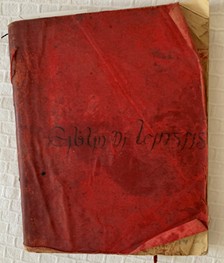
I 2022 agus mé i mbun eagrú ar leabhair agus cáipéisí eile a bhí in áiléar ár dtí, tháinig mé ar chóipleabhar seanchaite leis an ainm Eibhlín Uí Loingsigh scríofa ar an gclúdach. Istigh sa chóipleabhar, tá 163 leathanach de ‘cheachtanna’ cócaireachta agus bainistiú tí. Is idir Márta agus Aibreán 1901 a scríobhadh iad agus idir oidis, nodanna tí, glantachán, níochán, aerú, sláinteachas agus a lán eile ann.
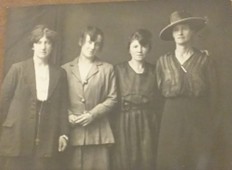
Ba í Eibhlín Uí Loingsigh (1853- 1946), Nic Chárthaigh roimh phósadh, mo shin-sheanmháthair.
Rugadh Eibhlín sa Tearmann in aice an Choireáin, i gContae Chiarraí in 1853, duine den seisear iníonacha a bhí ag Fionán Mac Cárthaigh ar de bhunadh Oileán Dairbhre é, agus Bairbre Ní Ríordáin ó Dhroim an Dísirt i gceantar Thrá Lí. Múinteoirí náisiúnta an bheirt acu agus tamall caite acu ag múineadh sa Spuncán ach bhris an Sagart Paróiste as a bpostanna iad ar mhaithe le post a thabhairt do ghaol leis! Rinneadh gearán le Canónach áitiúil agus tugadh poist dóibh ansin in Achadh Tiobraid i bparóiste Chathair Saidhbhín.
I séipéal an Spuncáin ar 25 Samhain 1877, pósadh Eibhlín agus Fionán Ó Loingsigh (1849-1907). Nuair a phósadar bhíodar beirt ag teagasc i Scoil Náisiúnta Chill Mhic Chiaráin, áit a raibh cónaí orthu. Aon duine déag clainne a rugadh dóibh ach ní raibh beo díobh faoi 1901 ach ochtar agus faoi 1911 ba bhaintreach í Eibhlín agus gan ach cúigear dá clann ina mbeatha. Spéisiúil go leor, is i nGaeilge a chomhlánaigh Eibhlín an daonáireamh i 1911.
Cailleadh Eibhlín Uí Loingsigh (Ellie M. Lynch de réir a cárta cuimhneacháin) ar an 31 Lúnasa 1946 i mBaile Átha Cliath, áit a raibh sí ina cónaí lena hiníon, Bríd Ní Loingsigh (oide, údar agus drámadóir). Ba í Bríd aintín le m’athair, Dónall Ó Móráin, agus is léi a chónaigh sé le linn a dhéaga agus é ag freastal ar Choláiste Mhuire, Cearnóg Pharnell de bharr gur cailleadh a mháthair féin (Eibhlín/Ellie) agus é ina leanbh.
Ábhar an chóipleabhair:
In January 1897 the Lord Lieutenant-General and General Governor of Ireland set up a Commission ‘to issue with a view to determining how far, and in what form, Manual and Practical instruction should be included in the Educational System of the Primary Schools under the Board of National Education in Ireland’.
The Commission issued its final report in 1898 having held 93 meetings in Ireland, including public sittings, and having visited 119 schools. Schools in England, Sweden and Denmark were visited by Commissioners and assistants to the Commissioners visited Germany, France, Switzerland and Holland. Reports from the US were included in the research. The Commissioners concluded that Manual and Practical ought to be included in the curriculum of all schools, including Kindergarten/Froebel settings, Primary and Post-Primary schools.
The various branches of Manual and Practical Instruction included were:
- Kindergarten activities
- Hand and Eye training
- Woodwork
- Drawing
- Elementary Science
- Agriculture
- Cookery: Laundry-work: Domestic Science
- Needlework: Special Industries
- Singing
- Drill and Physical Exercises
Regarding Cookery, the Commissioners reported: ‘We regard cookery as a most important branch of Practical Instruction. It is of special importance in Ireland where the labouring and artizan classes are sadly ignorant of the art of Cookery, their food in consequence being seldom prepared in an economical and nutritious manner as it might be.’
It was reported that in 1896 in only 83 National Schools and lack of qualified teachers and equipment was cited as a reason for this low number.
‘In 1896 the Commissioners of National Educatiion obtained from the Government leave to engage some special itinerant teachers of Cookery and Laundry work. The sanction was given only as an experiment, and teachers for whose provision for employment was made, was limited to four. The teachers to be employed were persons who were trained in these branches under the Royal Irish Association for Promoting the Training and Employment of Women...’
‘These teachers travel through the country, remaining for a sufficient time at selected centres, and giving instruction in various National Schools in the district, one or more lessons of two hours being given in each school each week. The course embraces twenty Demoonstration and Practical lessons in Household Cookery suitable for National School pupils of Classes IV, V and VI.’ ‘...special provision must be made for the training of the teachers by the itinerant teachers or otherwise’.My great-grandmother, Eibhlín Uí Loingsigh/Ellie M. Lynch née Mc Carthy was born in Tarmon, Co. Kerry in 1853. Both her parents (Fionán Mac Cárthaigh agus Bairbre Ní Ríordáin) were teachers who originally taught in Spunkane but were sacked by the Parish Priest to make way for a member of his own family! They then got teaching positions in Aughatubrid National School.
Ellen married Fionán Lynch (1849-1907) in 1877 and they were both teachers in Kilmakeerin National School. They had 11 children but only five were still alive when the 1911 Census was taken.
Ellen wrote the notes in the copybook between March and April 1901 when she was 48 years old and from my research she probably attended classes given by an itinerant teacher, possibly in Cahirsiveen.
The itinerant teachers were to give instruction based on 20 Demonstration lessons but only 14 Demonstrations are included in the copybook.
Ellen’s daughter, Eibhlín, married Mícheál Ó Móráin and they lived in Waterville. In 1923 they had their only child, my father Dónall Ó Móráin, but sadly Eibhlín died in 1925. Dónall was sent to live in Dublin with his aunt, Brighid, where he attended Coláiste Mhuire. Ellen moved to Dublin to live with Brighid, in her later years and she died there in 1946, aged 93. The copybook was probably in Brighid’s house in Dublin and came into my father’s possession when she died in 1974.
Muireann Ní Mhóráin
Submissions from 1901
Eibhlín Ní Loingsigh Cookbook, Eibhlín Ní Loingsigh